Tech Gadgets That Sound Useful But Often Aren’t: An Honest Buying Guide
We’ve all been there. You’re scrolling online late at night and an ad pops up. It’s a shiny new piece of tech that promises to “perfectly” solve a problem you didn’t even know you had. The excitement builds, you think “This is it!”, and you hit order. Unfortunately, many of these turn out to be just more useless tech gadgets.
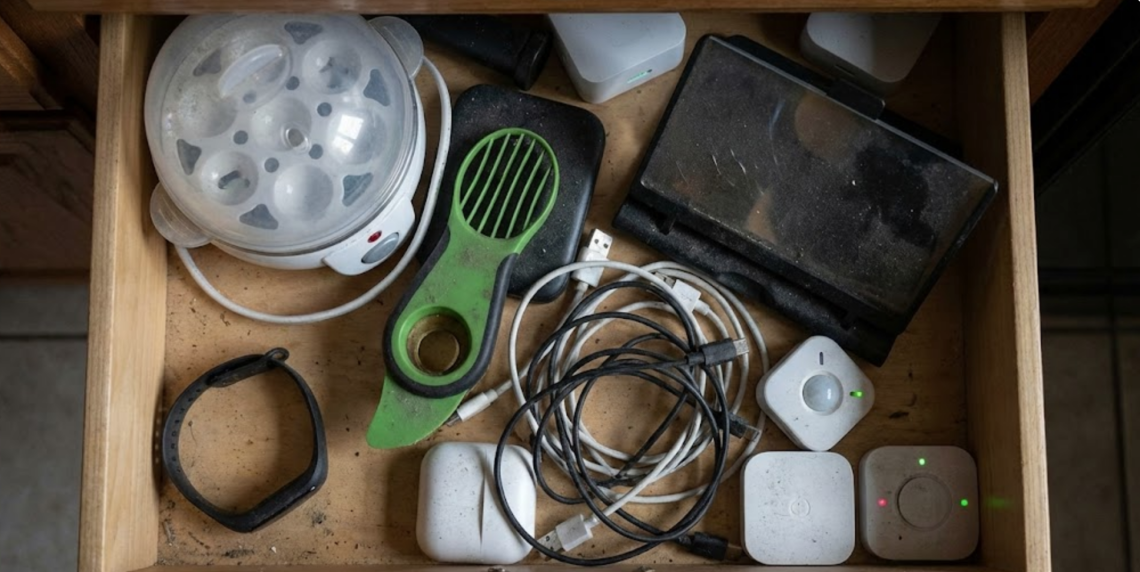
Two weeks later? That gadget is sitting in what we call the “tech graveyard”—that junk drawer where good intentions go to gather dust.
The tech world is full of genuine innovations that improve our lives, but it’s equally cluttered with devices created solely to sell us a solution that sounds good on paper but fails in practice. These are often referred to as useless tech gadgets. This guide is designed to help you protect your wallet and your living space from these common traps.
Why Are We Prone to Buying “Useless” Tech?
Before identifying the gadgets themselves, we need to understand why we feel the impulse to buy them:
- Manufactured Problems: Marketers are experts at taking a simple task (like boiling an egg) and framing it as a complex, messy problem that only their “technological” solution can fix.
- FOMO (Fear Of Missing Out): We feel left behind if we don’t own that new “smart” device everyone on social media seems to be talking about.
- The Price Trap: The thought, “It’s only $25, it’s worth a try,” is the primary reason drawers get filled with junk. Cheap, useless items add up faster than one expensive mistake.

The Most Common “Trap” Tech Categories
Here are the gadgets that sound incredibly useful in advertisements but often turn into disappointments for the average user:
1. Single-Function Kitchen “Robots”
Counter space in a kitchen is valuable real estate. Yet, some gadgets exist to perform only one ridiculously specific task, and they are often harder to clean than doing it manually.
- The Trap: Electric egg cookers, dedicated avocado slicers, electric hot dog toasters, quesadilla makers.
- The Reality: A pot and stove boil eggs perfectly. A knife handles an avocado. These devices are often the weakest links in the “Smart Kitchen” dream. They clutter the counter and cleaning them is a chore in itself.
2. Cheap, Non-Integrated “Smart Home” Products
The idea of a “smart home” is fantastic. But buying cheap, random devices without a plan doesn’t make life easier; it makes it more complicated.
- The Trap: Cheap Wi-Fi lightbulbs that only work with their own obscure app, Bluetooth trackers that constantly disconnect, “smart” air quality monitors with confusing data and no integration.
- The Reality: If you have to unlock your phone, find a specific app, and wait for a connection just to turn on a light, that system isn’t “smart.” Cheap devices that don’t integrate into a real ecosystem (like Apple HomeKit, Google Home, etc.) usually just create digital clutter.
3. Over-Specialized (and Often Inaccurate) Fitness Trackers
Tracking our health is important, but the market is flooded with cheap devices of dubious accuracy.
- The Trap: Tiny vibrating gadgets that claim solely to “fix your posture,” smart bands from unknown brands that claim to measure blood pressure (but never accurately).
- The Reality: Unless you are a serious athlete or have a specific medical requirement, the general tracking provided by a quality smartwatch from a reputable brand is sufficient. Cheap, niche devices claiming to solve a specific health issue are often little more than a placebo, and their data is unreliable.
4. Phone Screen Magnifiers and Cheap Lens Kits

The promise of upgrading your mobile experience to “cinema quality” is always tempting.
- The Trap: Plastic screen magnifiers you place in front of your phone, cheap clip-on macro or wide-angle lenses.
- The Reality: A plastic magnifier degrades image quality, ruins contrast, and restricts your viewing angle. Cheap clip-on lenses often introduce blurring and distortion around the edges of photos. Your phone’s built-in screen and advanced camera algorithms are almost always better than these plastic add-ons.
Before You Buy: The 3-Question “Necessity Test”
Before adding that next “amazing” gadget to your cart, ask yourself these three questions. This test can prevent about 80% of impulse tech purchases:
- Can I already do what this gadget does with something else I currently own? (If the answer is “Yes, but this looks cooler,” don’t buy it.)
- Is the setup and cleaning time required to use this device longer than the time it saves me? (This is a critical question for kitchen gadgets.)
- Do I realistically see myself using this gadget at least once a week for the next six months? (Be honest.)
Conclusion: Conscious Tech Consumption
Technology is wonderful, but only when it solves a genuine problem or brings us actual joy. Instead of chasing products that just “sound useful,” investing in quality, long-lasting tools that genuinely serve our needs is a more sustainable approach for both our wallets and our minds.
Don’t fill your drawers; simplify your life.
Frequently Asked Questions (Ready for FAQ Schema)
Q: How can I tell if a tech product is just hype? A: If a product claims to solve a very simple problem in an overly complex or “revolutionary” way, and it suddenly appears in ads everywhere on social media, it’s usually hype. Focus on real user reviews regarding durability and practicality, not just influencer unboxings.
Q: Why aren’t cheap smart home products recommended? A: Cheap smart home products often suffer from security vulnerabilities, frequent connectivity issues, and a lack of integration with major smart home systems (Google, Alexa, Apple). This creates frustration and app-clutter rather than convenience.
Q: Are single-function kitchen gadgets always bad? A: No. If you make rice every single day, a dedicated rice cooker is fantastic. But an “electric egg boiler” that you might use twice a year is unnecessary. The gadget isn’t inherently bad; the issue is the space it takes up relative to how often you use it.