How AI Is Changing Football Injury Recovery: From Traditional Rehab to Smart Performance Labs
How Artificial Intelligence Is Transforming Football Injury Recovery
AI in football injury prevention
Football has always been a physically demanding sport.
For decades, injuries meant long recovery periods, uncertain rehabilitation timelines, and sometimes even career-ending setbacks.
Today, artificial intelligence is beginning to change that reality.
From predictive injury models to AI-assisted rehabilitation programs, clubs around the world are using data and machine learning to better understand player health, reduce recovery time, and prevent injuries before they happen.
This shift marks a new era in sports medicine.
The Traditional Approach to Football Injury Recovery
Before advanced analytics and AI tools became available, injury recovery in football relied mostly on experience and observation.
Medical teams typically used:
- Physical examinations
- MRI and ultrasound scans
- Standard rehabilitation protocols
- Physiotherapy and manual assessment
While these methods were effective, they had limitations.
Recovery timelines were often estimated rather than calculated.
Training intensity adjustments depended heavily on the judgment of coaches and medical staff.
As a result, reinjuries were common, especially in areas such as:
- Hamstrings
- ACL injuries
- Muscle strains
Many players returned to the pitch before their bodies were fully ready.
‘football player injury tracking technology‘
How AI Is Entering Modern Football Medicine
Artificial intelligence is now helping medical teams analyze vast amounts of player data.
Modern football clubs collect performance and health information from multiple sources:
- GPS tracking devices
- Wearable sensors
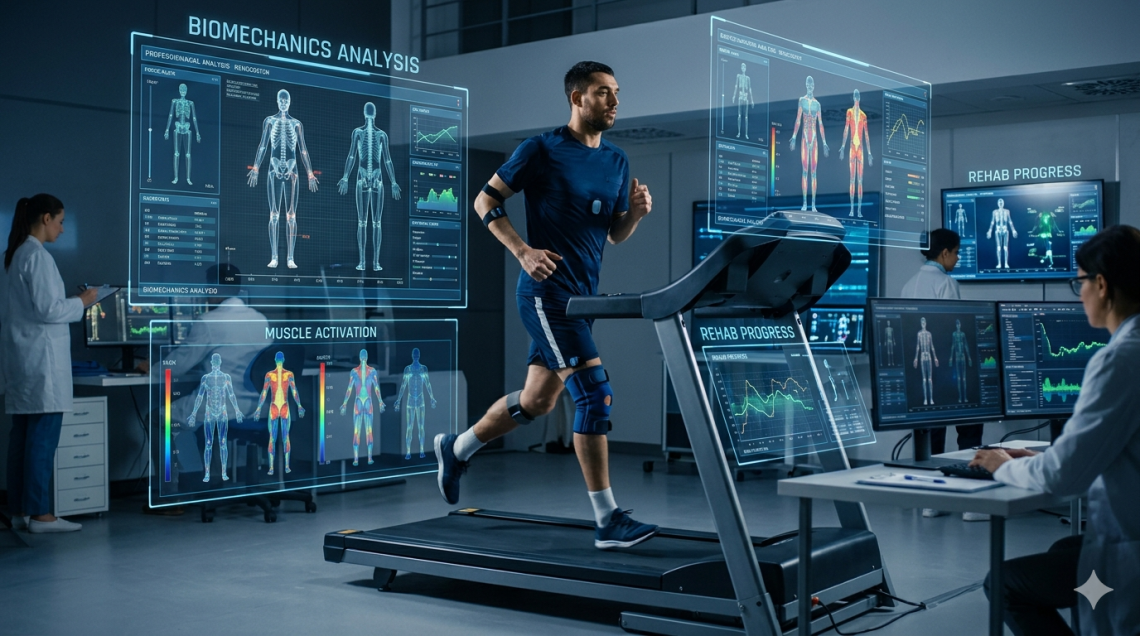
- Biomechanical analysis systems
- Training workload data
AI systems process this information to identify patterns that humans might miss.
For example, machine learning algorithms can detect subtle changes in running mechanics or muscle fatigue that often appear days before an injury occurs.
This allows medical teams to intervene early.
Real-World Examples: How Clubs Are Using AI
Several professional football clubs and sports technology companies are already experimenting with AI-driven injury prevention systems.
Some common applications include:
Predictive injury models
AI analyzes training load, sprint intensity, and recovery metrics to estimate injury risk.
Smart rehabilitation programs
AI-based platforms adjust rehabilitation exercises based on real-time feedback from sensors.
Movement analysis
Computer vision tools analyze player movement to detect biomechanical inefficiencies.
These technologies are helping clubs reduce player downtime and protect long-term performance.
Why Hamstring and ACL Injuries Are a Major Focus
Hamstring injuries remain one of the most common problems in football.
They often occur due to:
- Sudden acceleration
- Sprinting fatigue
- Muscle imbalance
AI models are particularly effective at identifying early warning signs for these injuries.
By monitoring sprint patterns, acceleration changes, and fatigue markers, systems can recommend rest or modified training sessions before damage occurs.
ACL injuries, which can keep players out for many months, are also a major target for AI-based biomechanical analysis.
The Global Trend: Sports Science and Data-Driven Medicine
Football is becoming increasingly data-driven.
Top clubs are investing heavily in sports science departments that combine:
- medical experts
- performance analysts
- data scientists
- AI engineers
Technology companies are also developing specialized sports AI platforms designed specifically for injury prevention and athlete monitoring.
This trend reflects a larger shift in professional sports toward data-based decision making.
The Future of AI in Football Injury Recovery
The next generation of sports medicine technologies may go even further.
Experts expect to see:
- AI systems predicting injuries weeks in advance
- personalized recovery programs generated automatically
- real-time injury monitoring during matches
- digital twins of athletes used to simulate stress and fatigue
These innovations could dramatically reduce recovery times and extend the careers of professional players.
Will AI Replace Sports Doctors?
Despite rapid technological progress, AI will not replace medical professionals.
Instead, it acts as a decision-support tool.
Doctors and physiotherapists still play a critical role in interpreting data, designing rehabilitation programs, and making final medical decisions.
The future of sports medicine will likely be a collaboration between human expertise and advanced technology.
Artificial intelligence is quickly becoming one of the most important tools in modern football medicine.
While traditional rehabilitation methods laid the foundation for injury recovery, AI is now adding precision, prediction, and personalization.
For players, this could mean shorter recovery periods and longer careers.
For clubs, it represents a new way to protect their most valuable asset: athlete health.
Lifestyle (future of technology in daily life)
AI in football injury prevention, How AI Prevents Football Injuries, AI Sports Injury Prediction in Modern Football, AI Sports Injury Prediction in Modern Football,