International Travel Essentials: What to Pack Before Your Next Trip (2026 Guide)
A practical international travel checklist covering documents, packing, connectivity, money, health, and destination-specific essentials—with useful advice for travelers departing from Singapore and beyond.
International travel is exciting until one small forgotten detail turns into a very expensive problem.
Your passport is valid, but does it meet your destination’s entry requirements?
Your phone works perfectly at home, but will it connect when you land?
You’ve packed three charging devices, but does your airline allow all of them?
And what happens if your luggage arrives a day later than you do?
The best international travel essentials aren’t necessarily the newest gadgets. They’re the things that help you avoid preventable problems before and during your trip.
Whether you’re flying from Singapore to Tokyo, London, Paris, or New York—or traveling between entirely different countries—this guide will help you decide what belongs in your bag, what needs checking before departure, and what you can leave behind.
International Travel Essentials: Quick Checklist
| Essential | Why It Matters | When to Prepare |
|---|---|---|
| Passport and entry documents | Avoid border and boarding problems | 4–8 weeks before |
| Travel insurance | Prepare for unexpected medical and travel costs | Before departure |
| eSIM or roaming plan | Stay connected on arrival | Before flying |
| Universal travel adapter | Use compatible devices abroad | Before packing |
| Airline-compliant power bank | Keep devices charged between stops | Check airline rules |
| Payment cards and backup cash | Avoid payment disruptions | Before departure |
| Medication and personal-care kit | Maintain essential routines | Before flying |
| Packing organizers | Keep luggage manageable | While packing |
| Offline travel information | Navigate without mobile data | The day before |
| Emergency document backups | Recover important information | Before leaving |
Not every traveler needs to buy all ten items. Start with what you already own, then fill the gaps based on your destination and itinerary.
1. Passport, Visa, and Entry Documents
Best for: Preventing the most serious avoidable travel problems.
Before buying any travel gadget, check your passport.
Entry requirements depend on your nationality, destination, travel purpose, and sometimes your transit route.
Some countries require several months of remaining passport validity. Others have different requirements, so don’t assume one universal rule applies everywhere.
For example, Singapore’s Immigration & Checkpoints Authority advises Singapore citizens traveling overseas to ensure their passports have at least six months’ validity before departure.
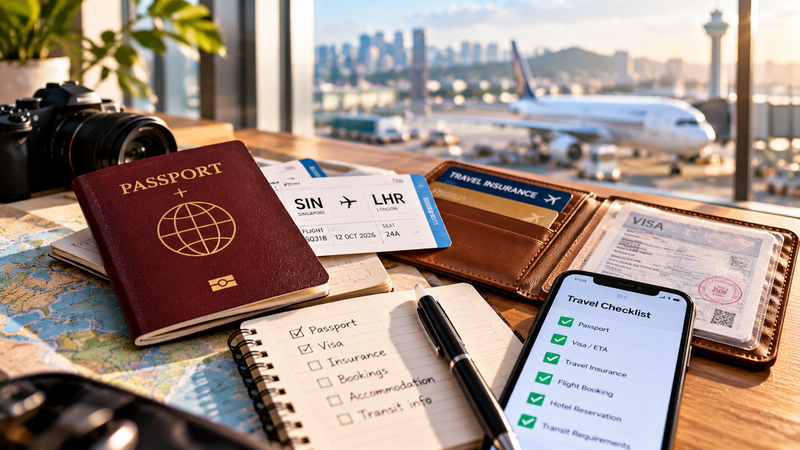
Before your trip:
- Check passport validity and condition.
- Confirm visa or electronic travel authorization requirements.
- Review transit requirements for connecting flights.
- Save your accommodation address and onward-travel details.
- Keep accessible copies of important bookings.
Traveler Talk: Travelers often focus on luggage and forget that a transit country may have different entry rules from their final destination. Another common mistake is assuming a previously issued visa or travel authorization is still valid.
Shop&World Tip: Create one offline folder on your phone containing your travel confirmations and important contact details. Keep sensitive documents protected rather than storing them in a publicly accessible folder.
Official resource: Singapore ICA — Advice for Travelling Abroad
2. International eSIM or Roaming Plan
Best for: Getting connected as soon as you arrive.
Your smartphone is one of the most important international travel tools.
It may contain your hotel reservation, navigation apps, train tickets, translation tools, and digital boarding passes.
But your usual mobile plan may not work abroad—or it may involve expensive roaming charges.
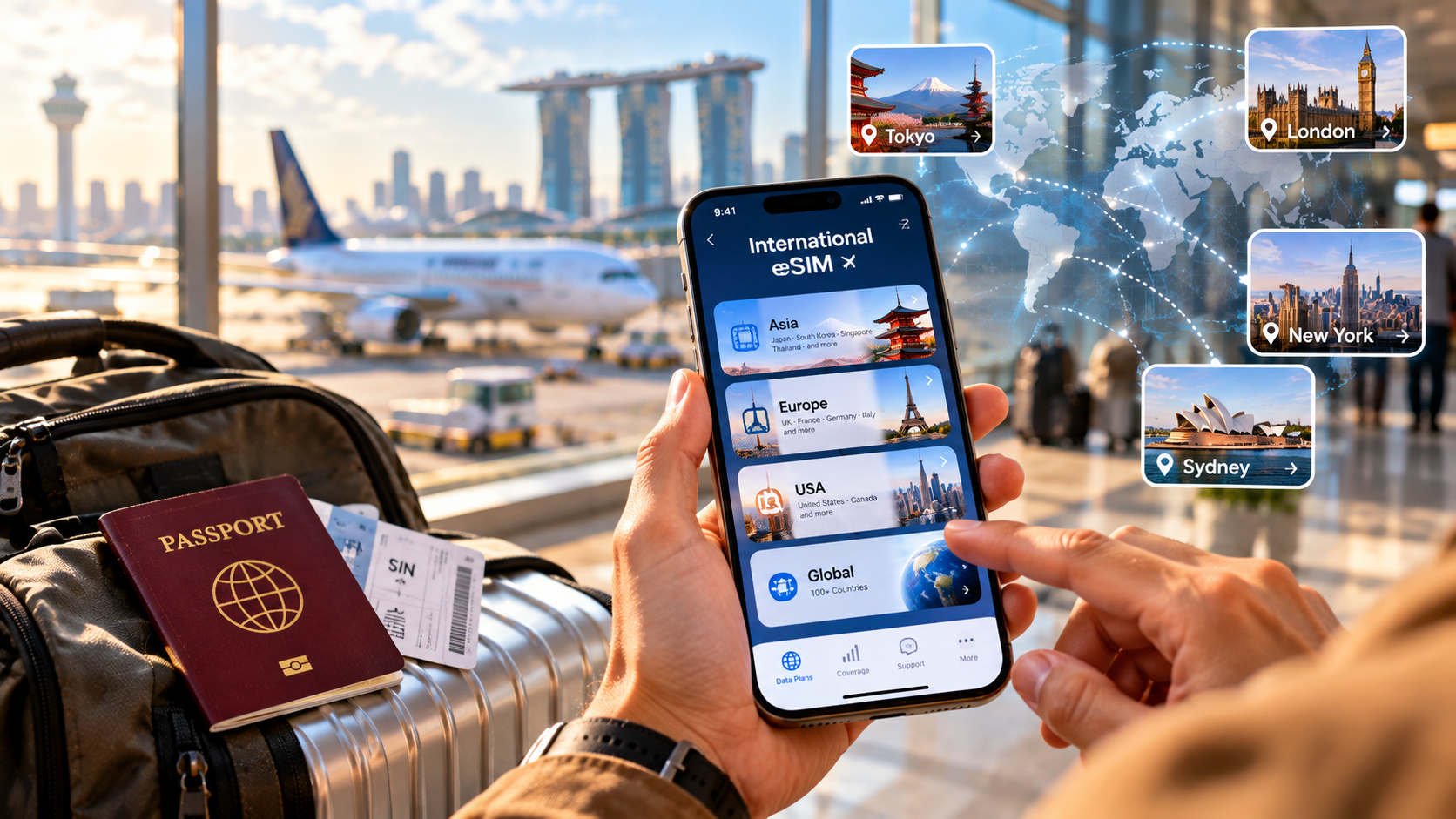
An international eSIM can provide a convenient alternative if your phone supports it and isn’t carrier-locked.
What to check before buying
Don’t choose an eSIM solely because it advertises unlimited data.
Compare the destination coverage, high-speed data allowance, validity period, hotspot support, activation instructions, and whether it includes calls or only mobile data.
For a trip involving several countries, a regional plan may be more convenient than purchasing separate plans.
Singapore travel example: A traveler visiting Japan and South Korea on the same trip might benefit from an Asia regional eSIM, while someone traveling only to London may prefer a UK-specific plan.
Traveler Talk: Travelers frequently compare the convenience of installing an eSIM before departure with buying a local SIM card after arrival. The better option often depends on trip length, data requirements, and whether a local phone number is needed.
Shop&World Tip: Install and prepare your eSIM before leaving home when the provider allows it, but follow its activation instructions carefully so the validity period doesn’t begin too early.
3. Universal Travel Adapter
Best for: Using your electronics across different countries.
A travel adapter is easy to overlook until you’re standing in a hotel room with a charger that doesn’t fit the outlet.
Electrical plug types vary around the world.
Singapore and the United Kingdom commonly use Type G plugs, while many European destinations use Type C or related socket types. Japan and the United States use other configurations.
A well-designed universal travel adapter can reduce the number of individual plug adapters you need.
What to look for
Choose a model that supports your destination’s plug type, has an appropriate electrical rating, and comes from a reputable manufacturer.
Integrated USB-C charging ports can be convenient, but check their actual power output.
Important: A plug adapter is not automatically a voltage converter.
Before using hair dryers, styling tools, or other high-power appliances abroad, check the appliance’s voltage rating and the destination’s electrical supply.
Traveler Talk: One recurring travel mistake is assuming that because a plug fits, every electrical appliance is safe to use. Another is buying a bulky adapter with many ports when a small destination-specific adapter would do the job.
Shop&World Tip: Check the voltage label on your laptop and phone chargers. Many modern chargers support a broad voltage range, but always verify the actual device.
4. Airline-Compliant Power Bank
Best for: Maintaining battery power during sightseeing and airport connections.
A power bank can be extremely useful when you’re navigating unfamiliar cities, using digital tickets, or spending long hours away from your hotel.
But international travelers need to think about airline regulations, not just battery capacity.
Important 2026 update for Singapore departures
From April 15, 2026, passengers departing Singapore are limited to a maximum of two power banks per person.
Power banks must travel in hand baggage, not checked luggage. They must be protected against short circuits and cannot be charged onboard. Passengers are also advised not to use them to charge electronic devices during the flight.
Capacity restrictions also apply, with larger batteries potentially requiring airline approval.
Always verify the current requirements with your airline and departure airport before flying.
Official resource: Civil Aviation Authority of Singapore — Power Bank Safety Restrictions
What to look for
A clearly labeled watt-hour rating, USB-C charging, a suitable capacity for your needs, reliable safety features, and a compact design.
Traveler Talk: Many travelers buy the highest-capacity power bank they can find, only to discover that airline restrictions make it inconvenient. A smaller, compliant model may be more useful for international trips.
Shop&World Tip: Check your return airline’s requirements too. Rules may differ between operators and departure countries.
For more in-flight accessories, read our guide to Best Travel Gadgets for Long Flights.
5. Backup Payment Card and Small Emergency Cash Reserve
Best for: Avoiding financial problems when one payment method fails.
Traveling with a single payment card creates an unnecessary point of failure.
Your card could be declined, damaged, lost, or temporarily blocked.
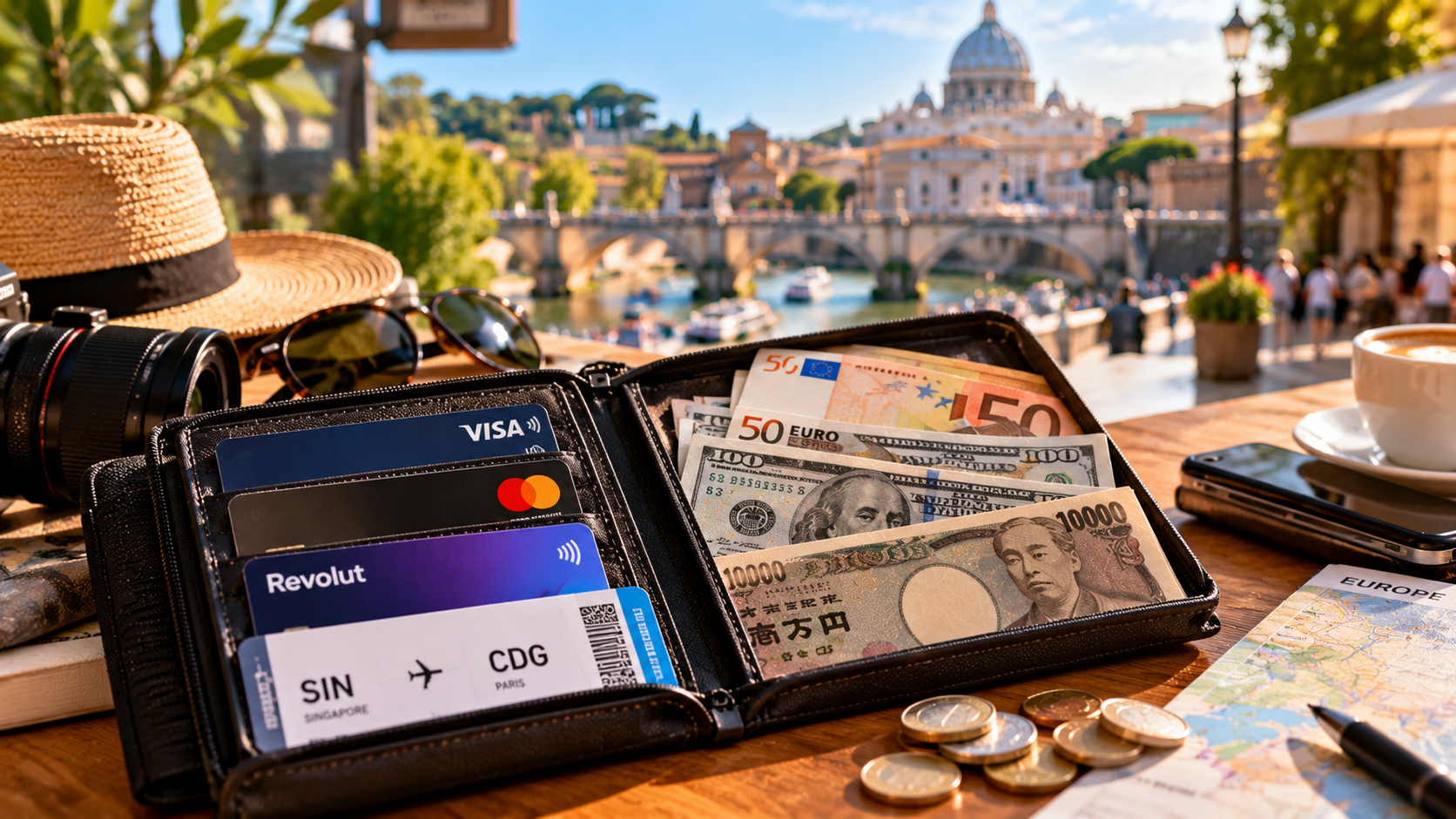
A second card, stored separately, provides a useful backup.
Before departure
Check your bank’s foreign transaction fees, overseas ATM charges, and international payment settings.
If possible, use a card with favorable currency conversion terms.
Keep a modest amount of destination-appropriate cash for situations where electronic payment isn’t available.
Singapore travel example: Contactless payments are convenient in many major cities, but a traveler moving between urban attractions, smaller businesses, and regional destinations shouldn’t assume every payment situation will be identical.
Traveler Talk: One common travel debate is whether cash is still necessary. The practical answer is to prepare for the destination rather than assuming every country has the same payment habits.
Shop&World Tip: Store your backup card separately from your main wallet, and keep your bank’s emergency contact information accessible offline.
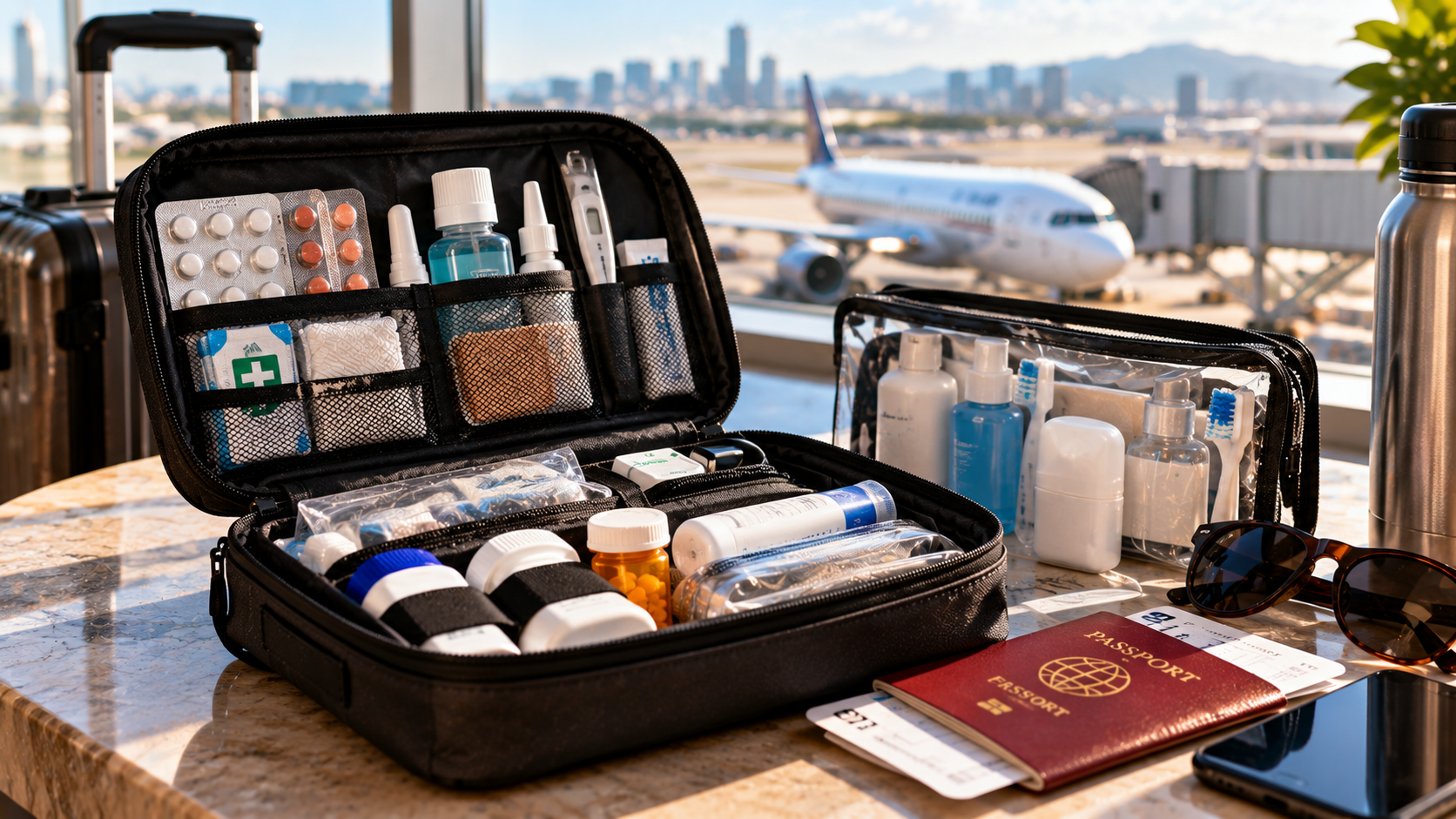
6. Compact Medication and Personal-Care Kit
Best for: Handling everyday needs without searching for a pharmacy abroad.
Your travel health kit doesn’t need to be large.
But it should contain the personal essentials you genuinely rely on.
That might include prescribed medication, basic first-aid supplies, personal hygiene products, and other items appropriate for your circumstances.
What matters most
Carry essential medication in its original labeled packaging when possible.
Check destination and transit-country rules for controlled or restricted medicines, and bring supporting prescriptions or medical documents when required.
Keep medically necessary items accessible in your cabin baggage, subject to applicable security requirements.
Traveler Talk: Travelers often discover that familiar over-the-counter products have different names, ingredients, or availability overseas. Preparing a small personal kit can save time, particularly when arriving late at night.
Shop&World Tip: Pack based on your actual needs and professional medical advice, not an oversized generic travel medicine checklist.
7. Lightweight Packing Organizers
Best for: Keeping international trips manageable across multiple stops.
Packing becomes more challenging when your itinerary includes several hotels or cities.
A simple organizer system can help separate clean clothing, worn items, shoes, and toiletries.
You don’t necessarily need a complete new luggage set.
Compression packing cubes, a lightweight laundry pouch, and a compact toiletry organizer may be enough.
What to look for
Prioritize low weight, durable zippers, washable materials, and sizes that fit your actual suitcase.
Avoid organizers that take up more space than the items they’re meant to contain.
Traveler Talk: Frequent travelers often disagree about whether packing cubes truly save space. Their most reliable benefit is organization—especially when unpacking and repacking several times.
Shop&World Tip: If you’re changing hotels every two days, pack cubes by clothing category so you can find things without unpacking everything.
For more options, see our Best Carry-On Accessories guide.
8. Offline Maps, Translation, and Travel Information
Best for: Staying prepared when your internet connection fails.
Not every international travel essential requires a purchase.
In fact, some of the most useful ones are free.
Before your trip, download offline maps where supported, save your hotel address, and make essential travel confirmations available without internet access.
Consider downloading relevant language resources in a translation app.
A simple pre-departure setup
Save your accommodation address in both English and the local language when appropriate.
Download transportation information, note emergency contact numbers, and keep your arrival instructions accessible.
Singapore travel example: Someone flying from Changi to Tokyo may rely heavily on digital navigation and train directions. Preparing offline information gives them a backup if mobile connectivity isn’t immediately available.
Traveler Talk: One frequent first-day travel problem is arriving at an airport without mobile data and needing to find the hotel. A screenshot of the address and transport instructions can be surprisingly valuable.
Shop&World Tip: Test your offline maps before departure by temporarily disabling mobile data and Wi-Fi.
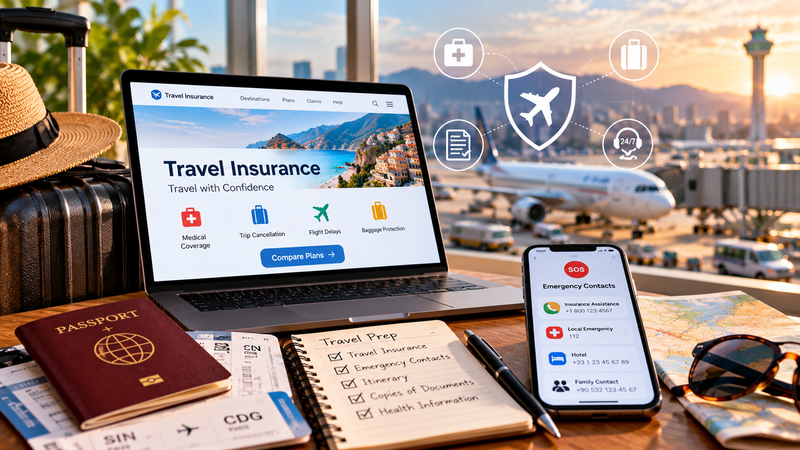
9. Travel Insurance and Emergency Planning
Best for: Preparing for events you can’t solve with a gadget.
A lost suitcase is frustrating.
An unexpected medical problem abroad can be considerably more serious and expensive.
Travel insurance may help cover certain medical expenses, cancellations, interruptions, or baggage-related losses, depending on the policy.
But policies vary significantly.
Before buying
Check medical coverage, exclusions, pre-existing-condition provisions, activity restrictions, destination coverage, and claim procedures.
Understand what evidence the insurer requires and how emergency assistance works.
Traveler Talk: Travelers often compare insurance policies only by price, overlooking exclusions and deductibles. The cheapest policy isn’t necessarily the most suitable for the trip you’re taking.
Shop&World Tip: Save the insurer’s emergency contact details offline and share your itinerary with someone you trust.
10. Destination-Specific Essentials
Best for: Avoiding purchases that make no sense for your trip.
This is where international travel preparation becomes more personal.
A traveler visiting London in November has different needs from someone visiting Bangkok in April.
And someone exploring Tokyo’s train network faces different daily challenges from a traveler spending a week on a Mediterranean beach.
Here’s how to think about it.
| Destination | Travel Condition | Useful Essential |
|---|---|---|
| Tokyo, Japan | Extensive transit and navigation | Offline maps and reliable phone connectivity |
| London, UK | Variable weather | Compact weather protection |
| Paris, France | Crowded sightseeing areas | Secure everyday bag |
| Rome, Italy | Long walking days | Refillable water bottle |
| Dubai, UAE | Intense seasonal heat | Sun protection and hydration supplies |
| Bangkok, Thailand | Heat and humidity | Lightweight cooling accessories |
| New York, USA | Long days exploring | Compact day bag |
| Singapore | Tropical rain and humidity | Lightweight umbrella |
The point isn’t to buy eight different products.
It’s to identify the conditions you’re likely to encounter and pack accordingly.
For a city-by-city approach, read 10 Popular Cities and the Travel Gadget You’ll Actually Need in Each One.
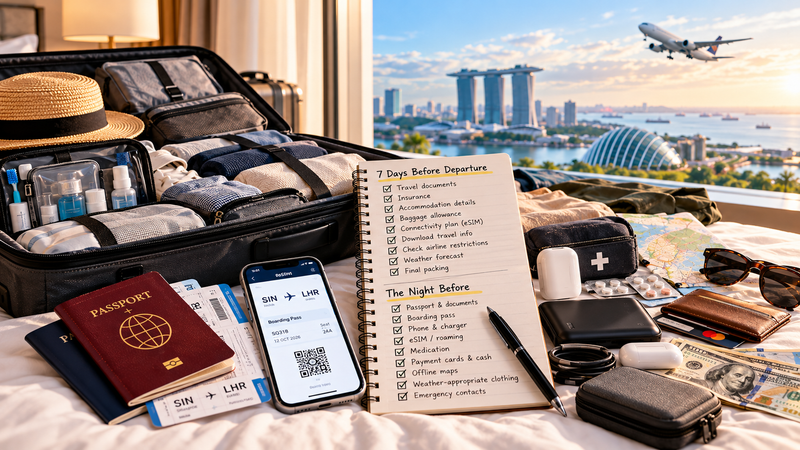
International Travel Checklist: 7 Days Before Departure
Seven days before departure, verify your travel documents, entry requirements, insurance, and accommodation details.
Confirm your baggage allowance and check whether your airline has special restrictions on batteries or other items.
Prepare your connectivity plan and download essential travel information.
Review the weather forecast for your destination, then make final clothing and accessory decisions.
Finally, confirm that the payment methods you intend to use will work internationally.
International Travel Checklist: The Night Before
- Passport and required entry documents ready
- Boarding pass and booking confirmations accessible
- Phone, charger, and permitted power bank prepared
- eSIM or roaming arrangements checked
- Essential medication in cabin baggage
- Main and backup payment methods packed separately
- Offline maps and accommodation address saved
- Airline baggage limits checked
- Weather-appropriate clothing packed
- Emergency contacts and insurance details available
What Not to Pack for an International Trip
A smarter packing list isn’t just about what you bring.
It’s also about what you leave behind.
Avoid carrying multiple devices that perform the same function, unnecessary full-size toiletries, bulky accessories with only one limited use, and expensive gadgets you haven’t tested before departure.
Don’t pack prohibited or restricted items without checking the rules.
And resist buying products simply because they’re labeled “travel essentials.”
The best international travel kit is the one that fits your actual itinerary.
Final Thoughts
International travel becomes easier when you prepare for the problems that genuinely matter.
Start with your passport, entry documents, insurance, connectivity, and payment options.
Then think about charging, organization, personal-care needs, and the conditions at your destination.
For travelers departing from Singapore, checking current power bank restrictions is an especially important part of that preparation.
For everyone else, the principle is the same:
Prepare for your destination, not for an imaginary perfect packing list.
You don’t need more travel gadgets.
You need fewer surprises.
Frequently Asked Questions
What are the most important international travel essentials?
A valid passport, required visas or travel authorizations, suitable insurance, reliable payment methods, phone connectivity, essential medication, and accessible travel information should come before optional gadgets.
What should I pack for my first international trip?
Start with documents, weather-appropriate clothing, medication, charging equipment, a suitable travel adapter, payment backups, and offline copies of essential reservations.
Do I need a universal travel adapter for international travel?
You need a compatible plug solution if your device’s plug doesn’t match the destination’s sockets. A universal adapter can be convenient for multi-country trips, but it does not necessarily convert voltage.
Can I bring a power bank on international flights?
Power banks are generally subject to cabin-baggage restrictions and capacity limits. Requirements differ by jurisdiction and airline. Singapore departures have a two-power-bank limit effective April 15, 2026.
Is an eSIM better than international roaming?
It depends on your phone compatibility, destinations, trip length, data needs, and your existing mobile plan. Compare total costs and coverage before choosing.
What travel essentials are useful for trips from Singapore?
Travel documents, destination-specific entry requirements, a compatible charging setup, an eSIM or roaming plan, appropriate clothing, and a power bank that meets Singapore’s current aviation restrictions are good starting points.
Editorial note: Travel regulations and entry requirements can change. Verify current information with official authorities, your airline, and your destination before departure.
international travel essentials checklist