15 Small Space Organization Ideas That Actually Save Room
Living in a small home doesn’t necessarily mean you need more storage.
Sometimes, you simply need to use the space you already have more intelligently.
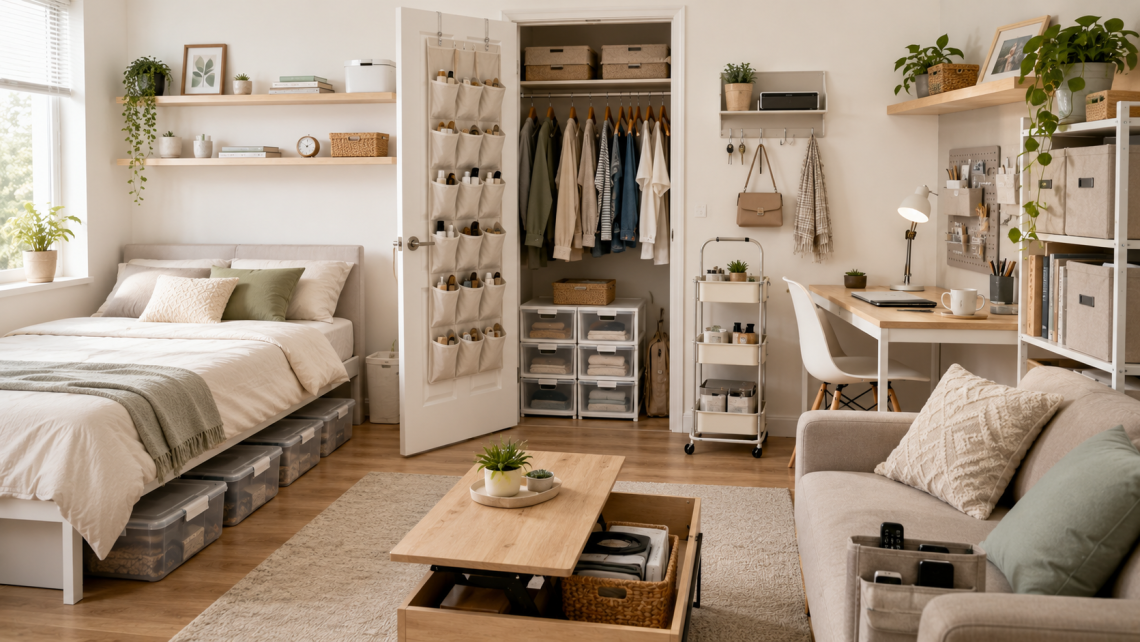
Corners, doors, walls, the space beneath your bed, and even the inside of cabinets can provide surprisingly useful storage when they’re organized correctly.
The key is knowing where to look.
These small space organization ideas focus on practical ways to reduce clutter, maximize storage, and make apartments, bedrooms, kitchens, and other compact spaces feel noticeably larger.
And most of them don’t require remodeling your home.
Start With Space, Not Storage Products
One of the biggest organization mistakes is buying storage containers before deciding what actually needs to be stored.
That can create a strange problem:
You end up buying more things to organize the things you already have.
Instead, start by identifying wasted areas in your home.
Look for:
- Empty vertical space
- Unused corners
- Space beneath furniture
- Cabinet gaps
- Empty walls
- The backs of doors
Once you identify those areas, choosing the right storage solution becomes much easier.
If you’re ready to compare actual products, our guide to Best Space Saving Products covers the storage solutions worth considering.
1. Use the Space Under Your Bed

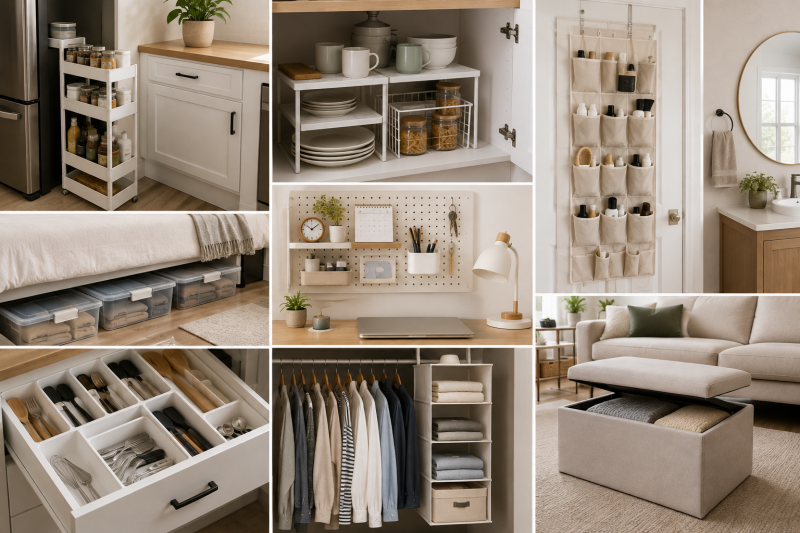
The area underneath a bed is essentially a hidden storage cabinet.
Low-profile containers can hold things you don’t need every day, including:
- Seasonal clothing
- Extra bedding
- Shoes
- Travel accessories
- Towels
Choose containers that slide out easily rather than boxes that require lifting the bed or moving furniture.
The easier your storage is to access, the more likely you’ll actually use it.
2. Think Vertically
When floor space is limited, look upward.
Vertical storage can dramatically increase capacity without making a room feel crowded.
Tall shelving units, stackable containers, hanging organizers, and wall-mounted storage all take advantage of space that would otherwise remain empty.
This works particularly well in kitchens, bathrooms, closets, and laundry rooms.

3. Turn Doors Into Storage
A door occupies almost no additional usable space when it’s open or closed.
That makes the back of a door one of the most overlooked storage areas in a small home.
Over-the-door organizers can hold everything from shoes and accessories to cleaning supplies and pantry products.
They’re particularly useful for renters because many options require no permanent installation.
4. Double Your Cabinet Space

Open a typical kitchen cabinet and you’ll often find a surprising amount of empty space above plates, bowls, or food containers.
Shelf risers solve this problem.
Instead of stacking everything directly on top of everything else, they create an additional level inside the cabinet.
The result isn’t technically a larger cabinet.
It just feels like one.
For more ideas specifically for the kitchen, see our Best Kitchen Gadgets on Amazon guide.
5. Use Narrow Gaps

That small gap beside the refrigerator might look useless.
It isn’t.
Slim rolling carts can transform narrow areas between appliances, cabinets, washing machines, or furniture into accessible storage.
They’re particularly useful for:
- Spices
- Canned foods
- Cleaning supplies
- Laundry products
- Bathroom essentials
This is one of the easiest ways to create storage where none appeared to exist.
6. Choose Things That Collapse

Products don’t need to occupy their full size when you’re not using them.
Collapsible baskets, strainers, containers, drying racks, and laundry hampers can dramatically reduce the amount of permanent storage they require.
This principle is especially useful in small kitchens.
Ask yourself:
Does this product need to occupy this much space 24 hours a day?
If the answer is no, a collapsible alternative may make more sense.
7. Organize Drawers Before Adding Furniture

When storage becomes difficult, the natural reaction is often to buy another cabinet.
Don’t.
Check your existing drawers first.
Drawer dividers can turn chaotic spaces into clearly defined storage areas.
They’re particularly effective for:
- Kitchen utensils
- Cosmetics
- Office supplies
- Chargers
- Clothing accessories
Sometimes you don’t need additional storage.
You need better storage.
8. Compress Seasonal Items

Winter jackets and comforters can consume half a closet while sitting unused for months.
Vacuum storage bags dramatically reduce the volume of soft items such as:
- Blankets
- Pillows
- Seasonal clothing
- Spare bedding
Move these items out of prime storage areas until they’re actually needed.
Your easiest-to-reach storage should be reserved for things you use regularly.
9. Give Every Everyday Item a Home

Keys on the counter.
Chargers on the sofa.
Mail on the dining table.
Small objects are often responsible for making an otherwise organized room look cluttered.
Create designated locations for frequently used items.
A small tray, wall organizer, cable holder, or drawer can be enough.
When every object has a predictable destination, maintaining organization becomes much easier.
10. Use Furniture for More Than One Purpose

In small spaces, furniture shouldn’t always perform just one job.
Consider:
- Ottomans with hidden storage
- Beds with drawers
- Coffee tables with compartments
- Benches with storage
- Foldable desks
- Nesting tables
Multi-purpose furniture reduces the number of individual pieces a room needs.
That means more open floor space.
11. Keep Countertops as Clear as Possible

Visual clutter makes a room feel smaller.
This is particularly noticeable in kitchens and bathrooms.
Move frequently used products onto:
- Wall storage
- Magnetic organizers
- Cabinet shelves
- Drawer systems
and keep countertops reserved for items that genuinely need to stay there.
A nearly empty countertop can make even a small kitchen feel considerably larger.
You can find more inexpensive ideas in our Best Home Gadgets Under $25 guide.
12. Use Containers That Stack Properly
Not all storage containers save space.
Some actually waste it.
Look for containers designed to stack securely and efficiently.
Square and rectangular containers generally make better use of shelves than irregularly shaped alternatives.
This is especially important in pantries and refrigerators where every inch matters.
13. Create Zones Instead of Random Storage
Organization becomes much easier when similar objects stay together.
For example:
Kitchen: cooking, baking, breakfast, snacks.
Bathroom: skincare, cleaning, towels.
Closet: daily clothing, seasonal clothing, accessories.
This makes it easier to see what you own and reduces duplicate purchases.
14. Leave Some Space Empty
This sounds contradictory, but maximizing every inch isn’t always the goal.
A shelf filled to 100% capacity is difficult to use.
A drawer packed tightly becomes disorganized quickly.
Good organization should leave enough breathing room to remove and return items comfortably.
Think efficient, not simply full.
15. Buy Organization Products Only After Measuring
This final rule can save both space and money.
Before buying any storage product, measure:
Width × depth × height.
This is particularly important for:
- Under-bed storage
- Rolling carts
- Cabinet organizers
- Drawer dividers
- Closet systems
A product marketed as “space saving” isn’t useful if it doesn’t fit your space.
The 3 Questions to Ask Before Buying Anything
When you’re considering a new organization product, use this simple test.
Does it use currently wasted space?
If yes, that’s a good sign.
Does it replace something larger?
Even better.
Will it make frequently used items easier to access?
That’s often more valuable than simply increasing storage capacity.
A genuinely good space-saving product should accomplish at least one of these things.
What Actually Makes a Small Room Feel Bigger?
Storage is only part of the equation.
A room usually feels larger when there is:
less visual clutter + more visible floor area + better organization.
That’s why simply adding more storage furniture can sometimes make the problem worse.
Instead of filling the room with cabinets and containers, focus first on hidden, vertical, and unused spaces.
If you’d like to make a compact room feel more personal without filling it with more objects, read Creative Home Ideas That Make Small Spaces Feel More Personal next.
Final Thoughts
The smartest small-space strategy isn’t about fitting as many possessions as possible into a room.
It’s about making the room easier to live in.
Use vertical areas before adding furniture. Store seasonal items outside prime storage zones. Take advantage of doors and hidden spaces. Choose products that collapse, stack, or perform multiple functions.
And when you do need an organizer, choose one that solves a specific problem rather than simply adding another container to your home.
For our recommended product categories and buying advice, continue to Best Space Saving Products.
Frequently Asked Questions
How can I organize a small space with too much stuff?
Start by removing items you rarely use, then prioritize hidden and vertical storage. Under-bed containers, door organizers, shelving, and stackable systems can increase usable storage without taking additional floor space.
What is the best way to maximize space in a small apartment?
Use vertical walls, the backs of doors, areas beneath furniture, narrow gaps, and multi-purpose furniture before adding new storage cabinets.
How do I make a small room look less cluttered?
Keep countertops and visible surfaces relatively clear, group similar items together, hide rarely used belongings, and avoid filling shelves to maximum capacity.
Are space-saving products actually useful?
They can be, but only when they solve a specific storage problem. Measure your available space first and prioritize products that use otherwise wasted areas.
What should I organize first in a small home?
Start with the area causing the most daily frustration. Kitchens, closets, entryways, and bathrooms usually provide the biggest immediate improvement.