How to Organize Your Home: 15 Simple Ideas for Every Room
A more organized home doesn’t necessarily require more cabinets, more storage bins, or a complete weekend spent reorganizing everything you own.
Often, the biggest improvements come from changing where everyday items live and how easily you can put them back.
The goal isn’t to create a picture-perfect home.
It’s to create one that’s easier to live in.
Whether you’re dealing with a crowded kitchen, an overflowing closet, or a living room that never seems to stay tidy, these practical home organization ideas can help you create a calmer and more functional space.
Start by Fixing Problems, Not Buying Organizers
It’s tempting to start a home organization project by ordering baskets, containers, and drawer dividers.
But there’s a better first step.
Walk through your home and identify the places where clutter repeatedly appears.
Maybe it’s:
- Shoes near the entrance
- Chargers scattered around the living room
- Food containers overflowing from kitchen cabinets
- Cleaning supplies under the sink
- Clothes piling up in the bedroom
These recurring clutter zones tell you where your organization system isn’t working.
Solve those problems first.
When you eventually need storage tools, our Best Home Organization Products guide covers practical options for different rooms and storage needs.
1. Create a Drop Zone Near the Entrance
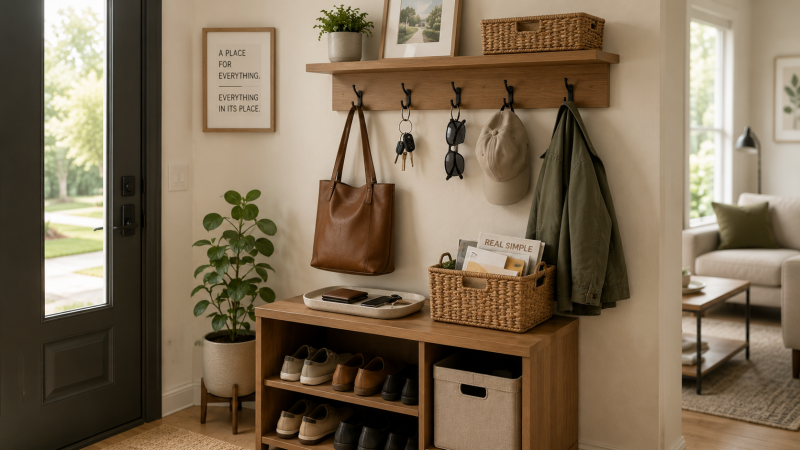
Keys, sunglasses, wallets, mail, and bags often end up scattered throughout the house because they don’t have a designated place.
Create a small drop zone near your entrance.
It could include:
- A small tray
- Wall hooks
- A key holder
- A basket
- A compact shoe organizer
The important part isn’t the product.
It’s the habit.
Everything that enters the house should have somewhere predictable to go.
2. Give Everyday Items Permanent Homes
One of the simplest organization rules is also one of the most effective:
Every frequently used item should have a permanent location.
If you’re constantly asking yourself where to put something, there’s a good chance it doesn’t have one.
This applies to everything from remote controls and charging cables to kitchen utensils and cleaning supplies.
When putting something away becomes automatic, keeping your home organized requires far less effort.
3. Organize Your Kitchen by Activity
Instead of organizing your kitchen purely by product type, consider organizing it around how you actually cook.
Create zones for activities such as:
Coffee station: coffee, filters, mugs, sweeteners.
Breakfast zone: cereal, bowls, oatmeal, spreads.
Cooking zone: oils, spices, utensils.
Baking zone: flour, sugar, measuring tools.
Keeping related items together reduces the amount of movement required when preparing food.
For practical tools that can make this space more efficient, explore our Best Kitchen Gadgets on Amazon guide.
4. Use Drawer Dividers
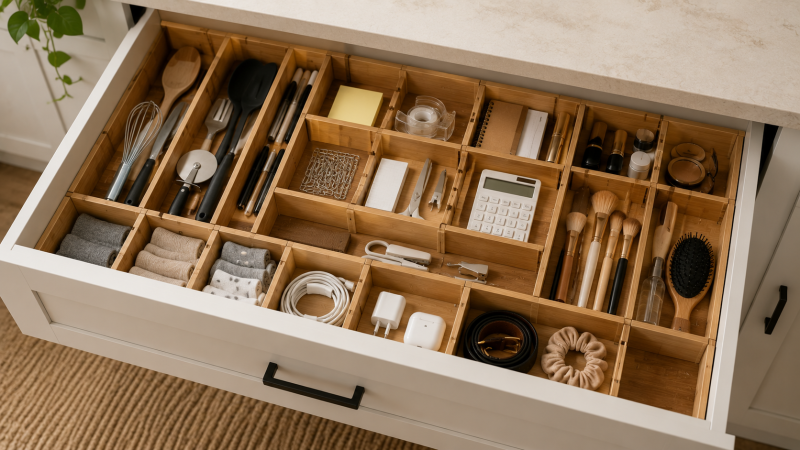
A large drawer isn’t always useful storage.
Without structure, it often becomes a collection of unrelated objects.
Adjustable drawer dividers create smaller dedicated areas for things like:
- Kitchen utensils
- Office supplies
- Cosmetics
- Socks
- Chargers
- Accessories
The goal is simple:
You should be able to open a drawer and immediately see what belongs there.
5. Take Advantage of Vertical Space
When shelves and cabinets become crowded, most people start looking for additional furniture.
Look upward first.
Vertical storage can dramatically increase capacity without reducing floor space.
Consider:
- Shelf risers
- Stackable containers
- Wall shelves
- Hanging organizers
- Tall shelving units
This approach is particularly valuable in apartments and smaller homes.
Our guide to 15 Small Space Organization Ideas That Actually Save Room explores this strategy in greater detail.
6. Organize the Space Under Your Sink
The cabinet beneath a kitchen or bathroom sink often becomes one of the messiest areas in the home.
Pipes make the space awkward, but it can still be organized effectively.
Group similar products together:
Daily cleaning
Dishwashing
Backup supplies
Trash bags
Small pull-out containers or stackable organizers can make items at the back much easier to reach.
7. Stop Stacking Everything
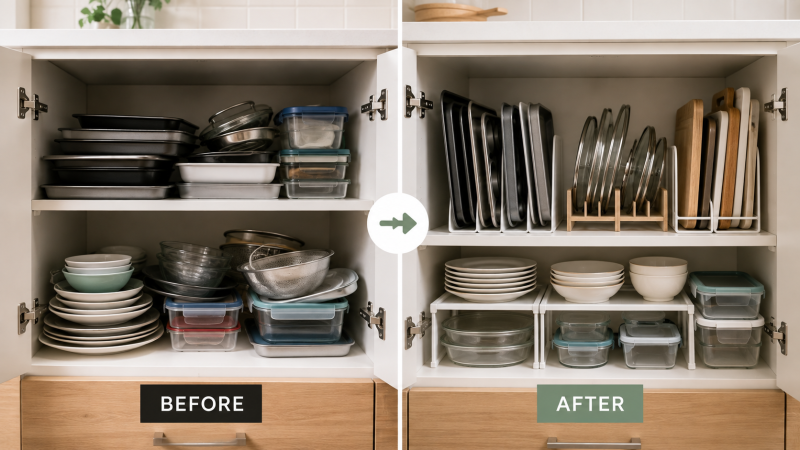
Stacking looks efficient until you need the item at the bottom.
Instead, look for ways to store frequently used objects vertically or in separate levels.
This is particularly helpful for:
- Baking sheets
- Cutting boards
- Pan lids
- Plates
- Food containers
The best organization system isn’t necessarily the one that fits the most.
It’s the one that makes everything easy to retrieve.
8. Make Better Use of Doors
The back of a door is valuable storage space.
Over-the-door organizers can create additional room in:
- Bedrooms
- Bathrooms
- Pantries
- Laundry rooms
- Closets
Because they use vertical space, they can add storage without taking away any floor area.
9. Create a Charging Station
Technology has created a new category of household clutter:
cables.
Instead of charging devices throughout the house, designate one convenient location for frequently used electronics.
A charging station can hold:
- Phones
- Smartwatches
- Earbuds
- Tablets
- Power banks
Cable organizers can keep everything accessible without creating a tangled mess.
Small convenience upgrades like these are also why many products in our Best Home Gadgets Under $25 guide can have an outsized impact on everyday routines.
10. Rotate Seasonal Items
Not everything you own deserves prime storage space all year.
Winter coats shouldn’t dominate an easily accessible closet in July.
Likewise, beach equipment doesn’t need to occupy your entrance during winter.
Move seasonal items into:
- Under-bed storage
- Higher shelves
- Storage rooms
- Vacuum bags
- Labeled containers
Reserve your easiest-to-reach storage for things you’re currently using.
11. Organize Your Refrigerator Into Zones
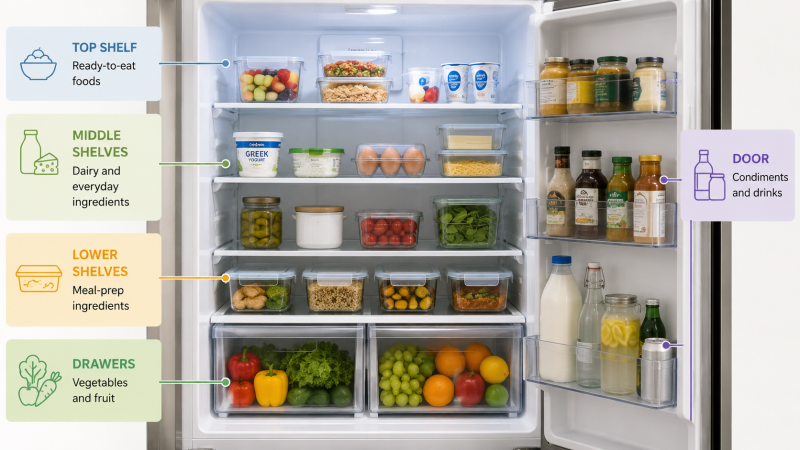
A refrigerator becomes easier to maintain when different shelves have specific purposes.
For example:
Top shelf: ready-to-eat foods.
Middle shelves: dairy and everyday ingredients.
Lower shelves: meal-prep ingredients.
Drawers: vegetables and fruit.
Door: condiments and drinks.
Clear containers can make smaller items easier to see and prevent food from disappearing behind larger packages.
12. Use Hidden Storage Before Adding Furniture
Before buying another cabinet or bookshelf, look for unused areas that already exist.
Common examples include:
- Under beds
- Under sofas
- Above cabinets
- Inside closet doors
- Beneath benches
- Narrow gaps between furniture
Using these spaces keeps more of the floor visible, which can also make rooms feel larger.
For products specifically designed around this idea, see our Best Space Saving Products guide.
13. Keep Frequently Used Items Accessible
There’s no benefit in creating a beautiful organization system if it’s frustrating to use.
The things you use every day should be easiest to reach.
Items used weekly can go slightly higher or deeper.
Rarely used belongings can occupy less accessible storage.
Think of your home as having three storage zones:
Prime: daily use.
Secondary: occasional use.
Archive: seasonal or rarely used.
This simple hierarchy can dramatically improve how efficiently storage works.
14. Leave Some Empty Space
An organized home doesn’t mean every shelf should be filled.
In fact, the opposite is often true.
When cabinets, drawers, and shelves are packed to maximum capacity, they’re difficult to maintain.
Leaving a little empty space makes it easier to:
- See what you own
- Remove items
- Put things back
- Accommodate occasional new purchases
Empty space isn’t wasted space.
It’s part of the organization system.
15. Follow the One-Minute Reset Rule
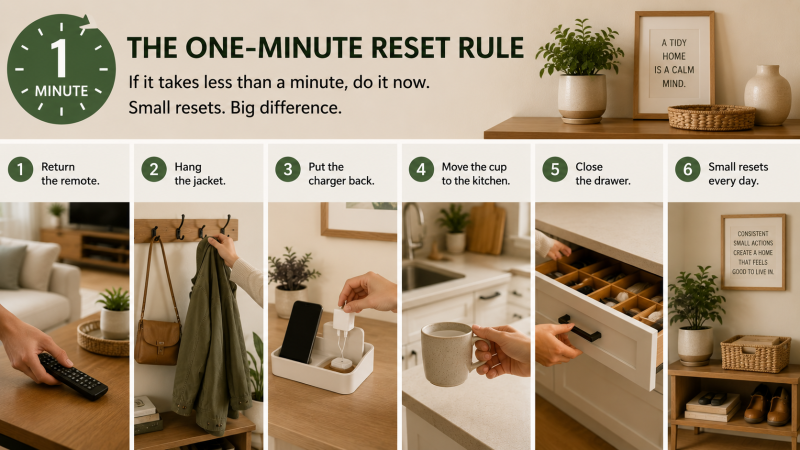
The best home organization system is one you can maintain.
If something takes less than a minute to put away, do it immediately.
Return the remote.
Hang the jacket.
Put the charger back.
Move the cup to the kitchen.
Close the drawer.
These tiny resets prevent small amounts of clutter from becoming large weekend cleanup projects.
Room-by-Room Organization Priorities
If organizing your entire home feels overwhelming, don’t try to do everything at once.
Start with the rooms you use most.
Kitchen
Prioritize easy access, cabinet space, drawers, and food organization.
Bedroom
Focus on clothing, under-bed storage, and clear surfaces.
Bathroom
Group toiletries and use vertical storage wherever possible.
Living Room
Reduce visible clutter and create designated places for electronics, remotes, and everyday accessories.
Entryway
Control shoes, bags, coats, keys, and incoming mail before they spread throughout the house.
Fixing one room completely is usually more satisfying than partially organizing five.
What Should You Look for in Home Organization Products?
Eventually, you’ll probably need a few products to support your system.
Before buying one, ask:
Does it solve a specific problem?
Don’t buy storage simply because it looks organized.
Does it fit the available space?
Measure before ordering.
Will the contents remain accessible?
Storage that makes everyday items harder to reach isn’t an improvement.
Can it adapt if your needs change?
Adjustable, stackable, and modular organizers usually offer better long-term value.
Does it reduce clutter or just hide it?
Sometimes the best solution is owning fewer things rather than finding another container for them.
Organization Should Make Your Home Easier to Use
A perfectly organized home isn’t one where everything is hidden inside matching containers.
It’s one where you can find what you need quickly and put it back without thinking.
Start with recurring clutter.
Give everyday items permanent homes.
Use vertical and hidden spaces before adding furniture.
Keep frequently used things accessible.
And only buy organizers when they solve a problem you’ve already identified.
Once you know what your home actually needs, explore our Best Home Organization Products guide for practical storage solutions designed to make those systems easier to maintain.
Frequently Asked Questions
What is the easiest way to start organizing a home?
Start with one small high-use area, such as a kitchen drawer, bathroom cabinet, or entryway. Completing one manageable area creates an organization system you can gradually expand throughout the home.
How can I organize my house without buying anything?
Declutter first, group similar items together, relocate rarely used belongings, use existing containers, and assign permanent locations to everyday objects before purchasing new organizers.
What rooms should I organize first?
Kitchens, entryways, bathrooms, and bedrooms usually provide the biggest improvement because they’re used frequently and tend to accumulate clutter quickly.
How do I keep my home organized long-term?
Make storage easy to access, avoid overfilling spaces, return frequently used objects immediately after use, and periodically remove things you no longer need.
Are home organization products worth buying?
Yes, when they solve a clearly identified problem. Drawer dividers, shelf organizers, storage bins, and vertical organizers can be extremely useful when they’re matched to the space and items being stored.